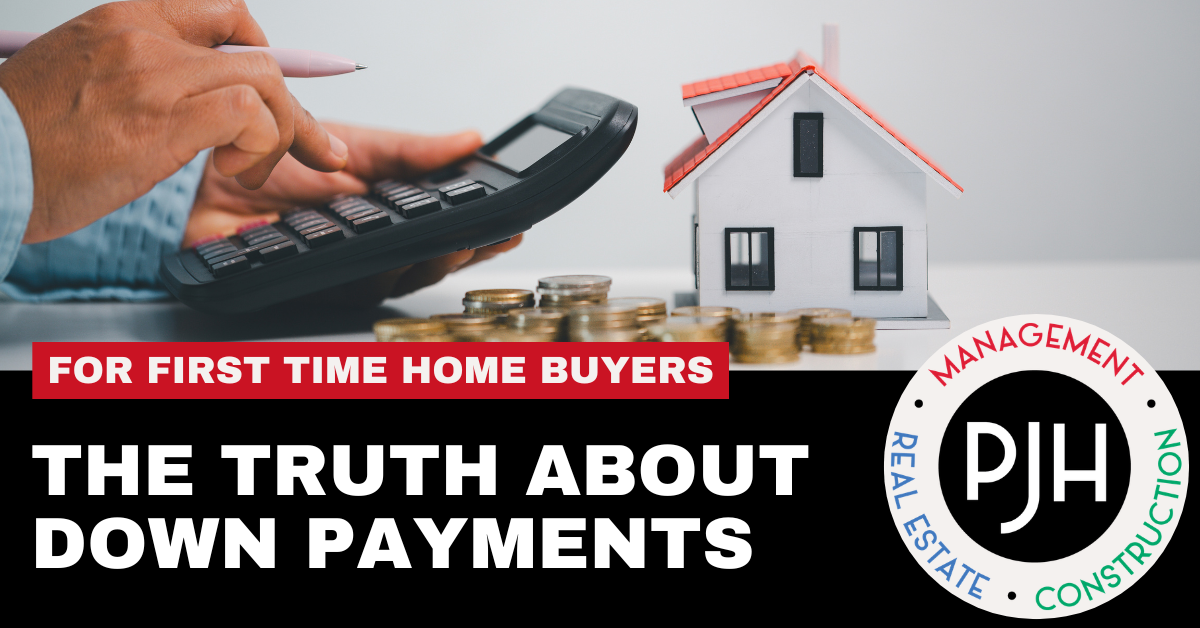
If you’ve been putting off buying a home because you think you need a 20% down payment, you’re not alone.
One of the most common down payment myths is that every homebuyer needs to save tens of thousands of dollars before purchasing a home. While a larger down payment can have benefits, it’s not always required.
The truth is that many first-time homebuyers qualify for loan programs that require much less down than they expect.
Let’s separate fact from fiction.
Myth #1: You Need 20% Down to Buy a Home
This is by far the biggest down payment myth.
While putting 20% down can help you avoid private mortgage insurance (PMI) on many conventional loans, it is not a requirement for buying a home.
Depending on the loan program and your financial situation, some buyers may qualify with significantly smaller down payments.
The best way to know what’s available is by speaking with a qualified lender who can explain your options.
Myth #2: A Bigger Down Payment Is Always Better
Saving more money can certainly reduce your monthly mortgage payment and lower the amount you borrow.
However, waiting years to save a larger down payment isn’t always the best financial decision.
For some buyers, purchasing sooner with a smaller down payment may allow them to begin building equity instead of continuing to rent.
Every situation is different, which is why it’s important to evaluate your personal financial goals.
Myth #3: Down Payment Assistance Is Rare
Many buyers don’t realize there are programs specifically designed to help first-time homebuyers.
Depending on where you live and your qualifications, you may be eligible for assistance that helps cover some of your upfront costs.
These programs can make homeownership more accessible for buyers who thought they needed to save much more money.
Myth #4: Your Down Payment Is the Only Cost
Your down payment is only one part of purchasing a home.
It’s also important to budget for expenses such as:
- Closing costs
- Home inspections
- Moving expenses
- Utility deposits
- Emergency savings after closing
Planning for these costs can help you feel more confident throughout the homebuying process.
So, How Much Should You Save?
There isn’t one number that works for everyone.
The amount you should save depends on:
- Your financial goals
- Your income
- The loan program you qualify for
- The type of home you’re purchasing
Speaking with a lender early in the process can help you create a realistic savings goal instead of relying on assumptions.
The Best First Step
You don’t need to have everything figured out before talking with a real estate professional or lender.
In fact, having a conversation early can help you:
- Understand your financing options
- Learn about available loan programs
- Build a savings plan
- Create realistic homeownership goals
Even if you’re planning to buy a year or two from now, knowing where you stand today can make the journey much easier.
Final Thoughts
Many renters delay homeownership because they believe they need a 20% down payment. In reality, there are a variety of loan programs and assistance options that may make buying a home more achievable than expected.
Instead of guessing how much you’ll need, take the time to learn about your options. You may discover that homeownership is closer than you think.
FAQ
Do I really need a 20% down payment to buy a home?
No. While a 20% down payment can provide certain benefits, many loan programs allow qualified buyers to purchase a home with a much smaller down payment.
What is down payment assistance?
Down payment assistance programs are designed to help eligible homebuyers cover some of the upfront costs of purchasing a home. Eligibility requirements vary depending on the program.
Should I wait until I save a larger down payment?
Not necessarily. The right time to buy depends on your financial situation, goals, and the loan options available to you. Speaking with a lender can help you determine the best path forward.
- Learn more! Read some of our related articles or stop by our You Tube channel.
- Schedule a free 15 minute call with one of our Real Estate Professionals to ask questions, start the process to buy or sell, or get financial advice!